On top of a semester already full of classes, schedules, meetings, writing, and data analysis, there is still a little more field work. Now is the time for seed collection of ash trees and Rachel was able to get some help with this from the Forest Service. They went out to collect seeds from the few remaining adult trees in the area. Many of them have produced seed, but the embryos inside were not fully developed. This can happen for a variety of reasons: the wrong type of weather occurring at the wrong time (spring frost), tree stress (EAB beetle), or golls (parasites creating the flower or seed into a home). Also, there are male and female ash trees so they cannot fertilize themselves. If the males and females are not close enough together the pollen from the males cannot fertilize the female flowers on the tree. Here are a few picks of the process and trees:
First is a pic of the extendable pole pruners (yellow), which are very handy and kinda heavy.
Then this is a branch that has seeds and flowers that have a goll formation
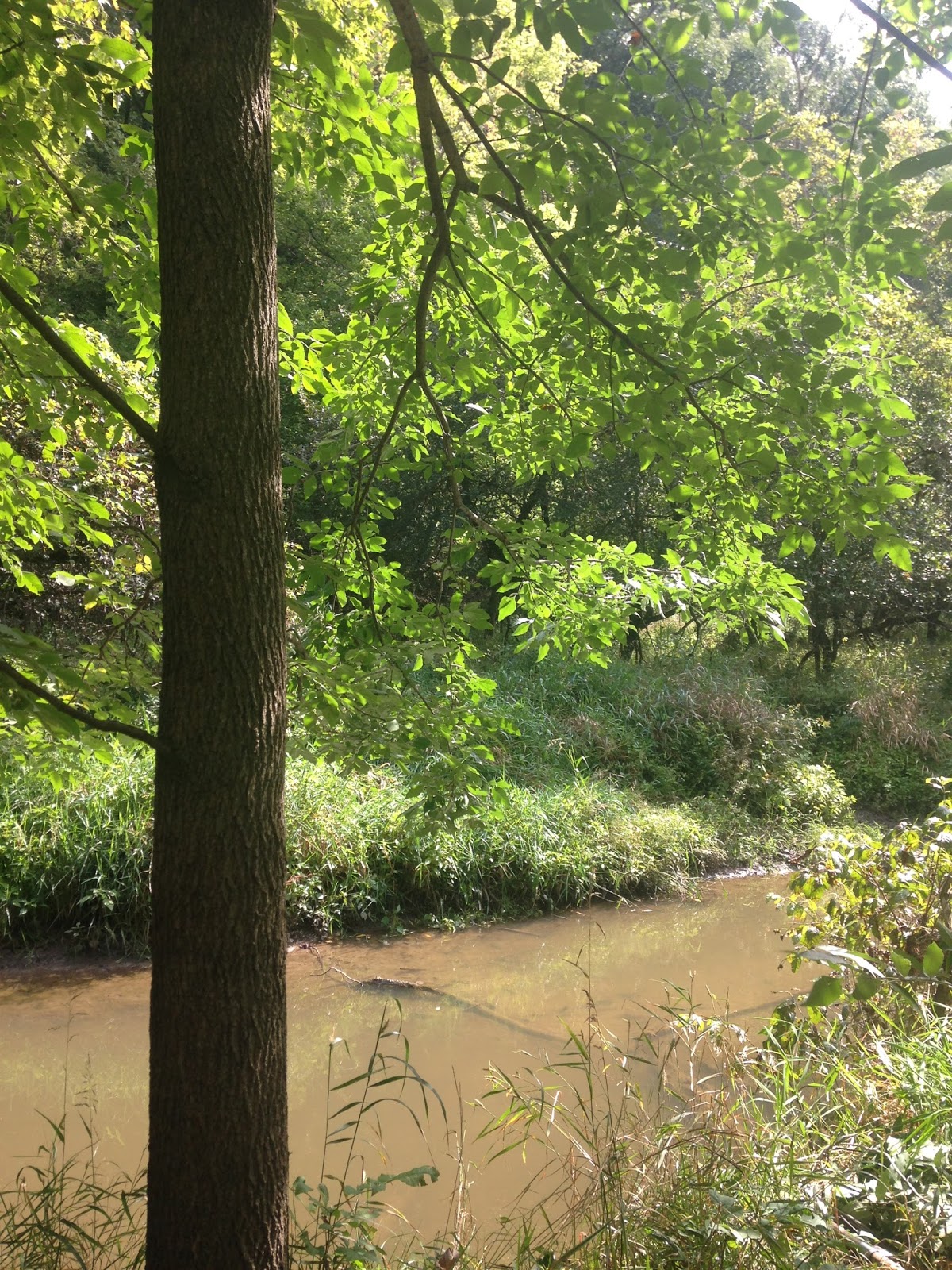
And one of the seeding trees next to the creek
Showing posts with label ohio. Show all posts
Wednesday, October 5, 2016
Thursday, September 15, 2016
Great Blue Heron
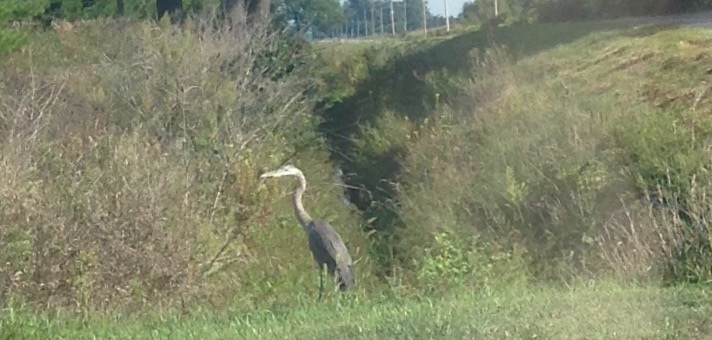
For a couple of days last week a Great blue heron was always near a ditch one of the root labbers passes on the drive home. She got a good pic of it one day and it reminded her of the bird research of our lab alum Sara Zaleski. During the late summer of 2014, large ditches which held water in
August were surveyed for wading birds. Surveys were conducted for three
months. Great blue herons were the only wading bird detected during
surveys. Results indicate great blue herons prefer large ditches which
hold water throughout most of the year and are sparsely vegetated. Great
blue herons were likely utilizing the ditches as foraging habitat. To
manage ditches for great blue heron habitat, it is best to select large
ditches and keep them clear of vegetation by regularly mowing or
dredging the ditch.
Thursday, August 25, 2016
Happy Birthday National Parks Service!! 100 years!
Today official is the 100th birthday of the National Parks Service! To celebrate everyone is allowed to visit any National Park for free from today Aug 25th till Sunday Aug 28th, so start planning your trip by visiting their website here:
National Park Service Centennial
They also have a fun website where you can photoshop a selfie of you in a national park here:
picyourppark
Some of my favorites are: Sleeping Bear Dunes Nat'l Lakeshore, Mammoth Cave Nat'l Park, Perry's Victory/International Peace memorial at Put-in-bay, and Pictured Rocks Nat'l Lakeshore.
What's Your Favorite?
National Park Service Centennial
They also have a fun website where you can photoshop a selfie of you in a national park here:
picyourppark
Some of my favorites are: Sleeping Bear Dunes Nat'l Lakeshore, Mammoth Cave Nat'l Park, Perry's Victory/International Peace memorial at Put-in-bay, and Pictured Rocks Nat'l Lakeshore.
What's Your Favorite?
Thursday, August 4, 2016
So excited to see a Root Lab alum doing such important work.Check out this article:
A Homecoming for Hellbenders
Greg Lipps is apart of a reintroduction program that is adding captive raised hellbenders into Ohio streams to try and help the threatened population. The eastern hellbender in this picture is speckled and situated horizontally between the rocks. They are a large fully aquatic salamander, growing to 10 - 15 inches, with another 10 inches of tail. They can be darker or lighter color than shown here, and with or without speckles/spots. Read the NY times article to find out more! http://www.nytimes.com/2016/08/02/science/hellbenders-salamanders.html
Posted in Sept. 2017
Find out more about all his work here:
Greg Lipps Homepage
A Homecoming for Hellbenders
Greg Lipps is apart of a reintroduction program that is adding captive raised hellbenders into Ohio streams to try and help the threatened population. The eastern hellbender in this picture is speckled and situated horizontally between the rocks. They are a large fully aquatic salamander, growing to 10 - 15 inches, with another 10 inches of tail. They can be darker or lighter color than shown here, and with or without speckles/spots. Read the NY times article to find out more! http://www.nytimes.com/2016/08/02/science/hellbenders-salamanders.html
Posted in Sept. 2017
Find out more about all his work here:
Greg Lipps Homepage
Subscribe to:
Posts (Atom)